

I was scrolling through Instagram one day, when an ad offering a free tour of a water reclamation plant caught my eye. I have always been curious about the process that makes it possible to turn wastewater into reusable water and this plant was a few minutes from my house, so I signed up immediately.
The San Jose Creek Water Reclamation Plant is one of 11 reclamation plants operated by the Los Angeles County Sanitation Districts. This agency was formed in 1923 under the direction of surveyor Albert Kendall Warren, Asemblyman Hugh Pomeroy, and L.A. County Supervisor R.F. McClellan who worked to get the County Sanitation District Act passed. Warren became the agency’s 1st chief engineer and broke ground on the first part of the sewer system that he envisioned in 1925. The were system would use gravity to move wastewater down to a regional treatment facility that was opened in 1928.
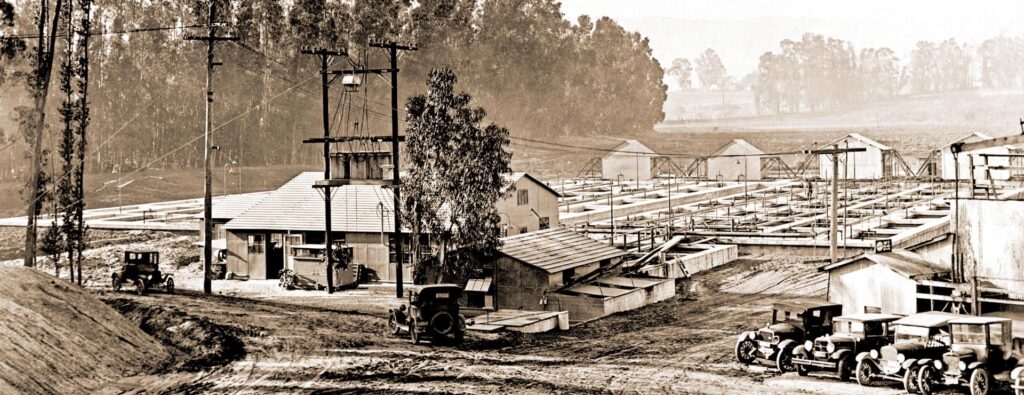
Photo credit: Los Angeles County Sanitation Districts
Over the decades, the agency continued to expand its facilities and responsibilities, which also include solid waste management and today it consists of 24 independent special districts that serve 5.5 million people in Los Angeles County across 850 square miles and encompasses 78 cities and unincorporated areas.
The district operates and maintains 1,400 miles of sewers, 49 pumping plants, and 11 wastewater treatment plants that collectively treat around 400 million gallons of water per day.
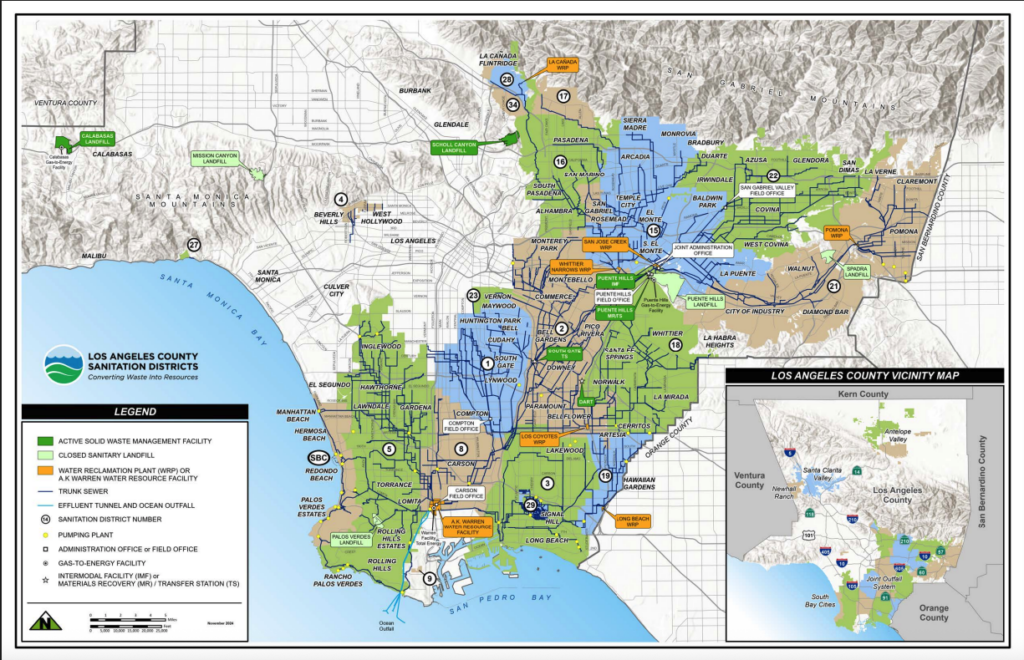
The biggest of these is the San Jose Creek Wastewater Reclamation Plant, which we got a chance to tour and learn about their operations.
A reclamation plant is where wastewater is processed so that it can be reused. There are three treatment phases for the water.
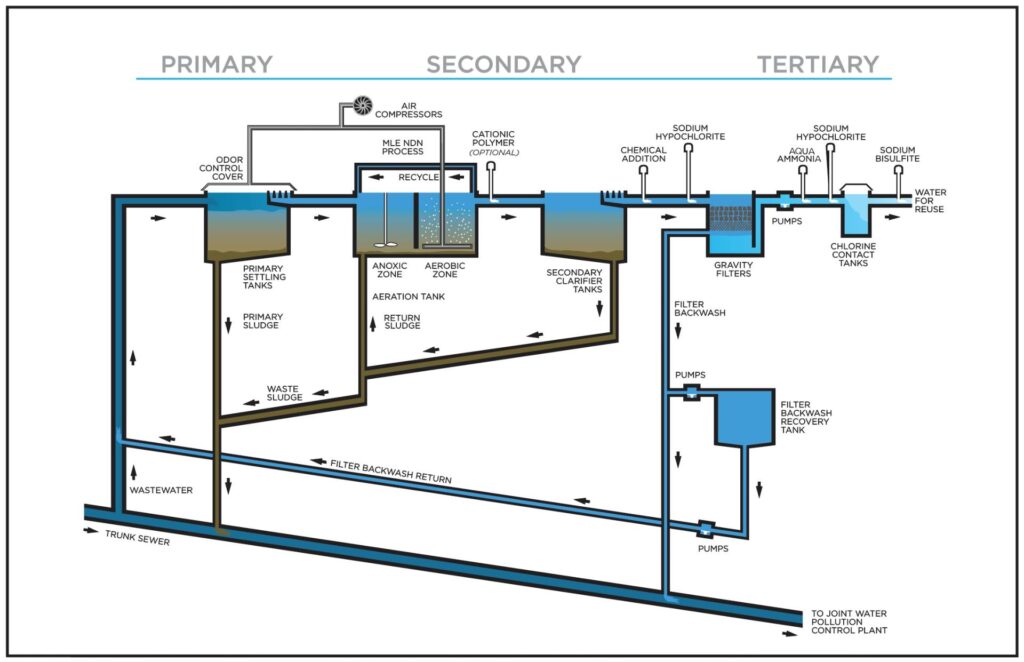
Photo credit: LACSD
The first or primary treatment is a physical process that uses what’s called “sedimentation.” Water is allowed to flow slowly so that anything that is heavier than water sinks and anything that is lighter will float. This area of the facility is covered with lids to help with the air quality and to mitigate the smell.
You’d be surprised at the things that people flush that is separated in this step.
All that stuff that sinks to the bottom is called sludge and what floats is called scum. This primary treatment takes about 2 hours and removes about 60% of pollution.
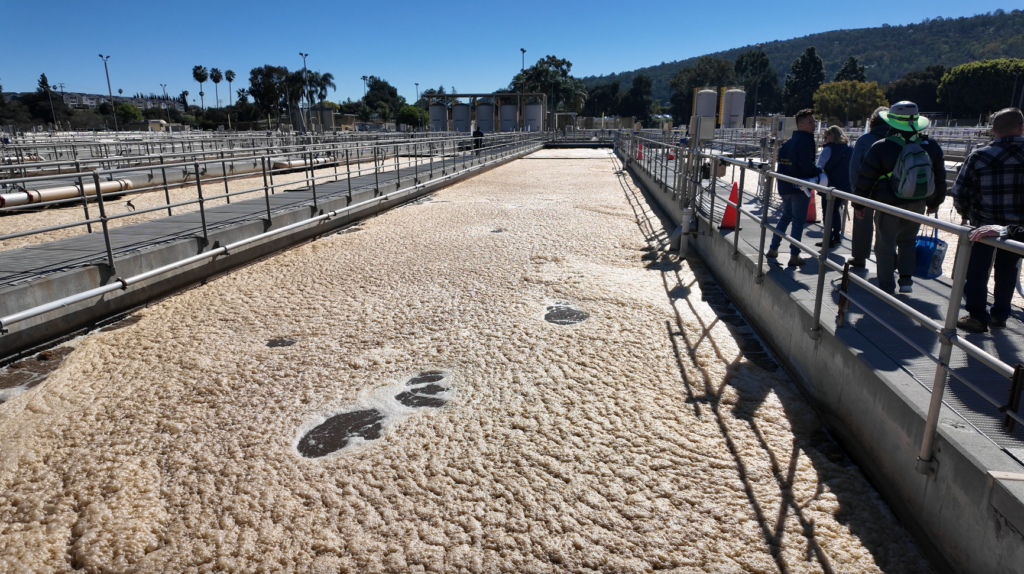
The secondary treatment is a biological process, where bacteria is used to break down organic material. This area, which I call “forbidden chocolate milk,” has a lot of bubbles because or aeration. Oxygen is being pumped into the tanks to control the level of oxygen, which controls the type of bacteria that is in the tank, so that specific types of nutrients can be targeted as the water makes its way through this treatment. At the end, the water goes through sedimentation once again, so the leftover sludge and scum—and the bacteria—can be removed. This process takes around 4-6 hours.
The tertiary and final treatment is filtration and disinfection. Water flows into filters made up of coal, sand, and gravel and chlorine is added for disinfection. This process takes around 2-3 hours.
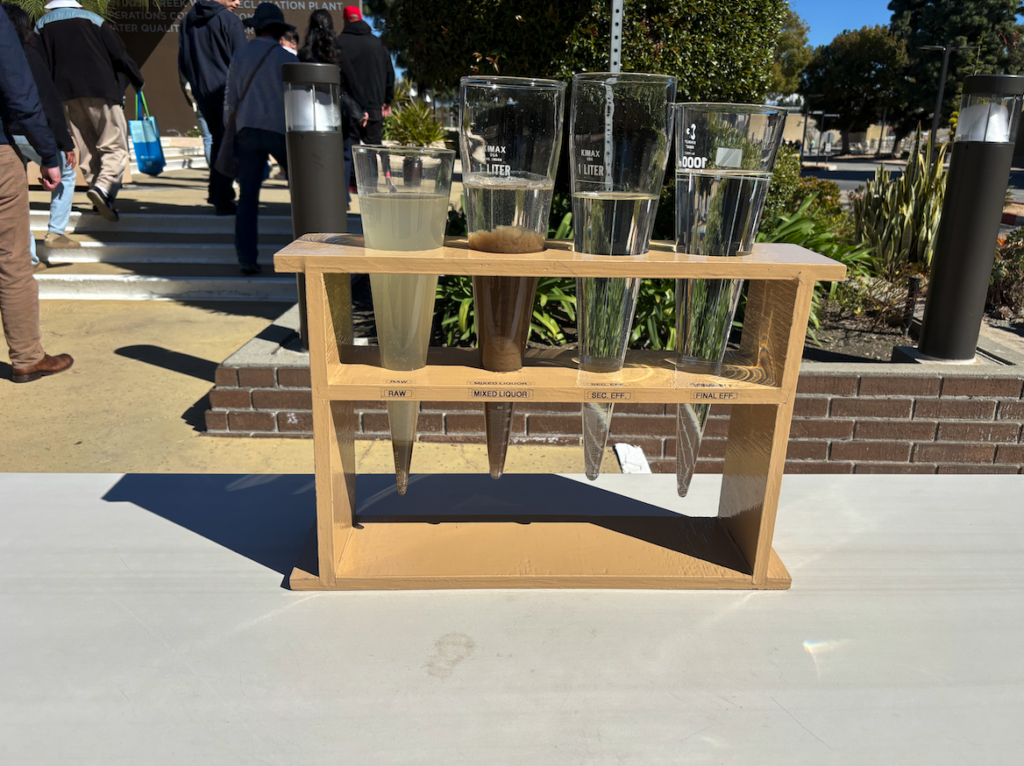
Once they water has been processed, in can now be used for agriculture, industry, landscaping, replenishing groundwater, and environmental use, which is used to keep sustainable habitats year round for wildlife.
For more than 100 years, the men and women of the Los Angeles County Sanitation Districts have quietly built and maintained one of the most important — and least glamorous — systems in California history. A system that protects public health, conserves water, and keeps our communities running every single day.