
Riverside is a city that I rarely ventured too while growing up in Southern California. I have vague memories of driving out to visit some relatives as a kid, but can’t say I spent any significant amount of time there until I became an adult.
Riverside (and the the Inland Empire) get a bad rap from people that think that people don’t live there by choice, but rather because of it’s affordability. That it’s just some “bedroom community” where people just sleep in between their commutes to the more “cosmopolitan” L.A. and Orange Counties; an area that is nothing more than cookie-cutter neighborhoods and sprawling warehouses that is devoid of arts and culture. Nothing could be further from the truth.
The Inland Empire is rich in cultural destinations and nowhere is that more well illustrated than in Riverside; The “City of Arts and Innovation.” There are is so much history and art that it was hard to distill it down to a few spots for a video, but I picked 3 of my favorites and ventured out early one day in January to hit the trail at Mt. Rubidoux before it got too hot.
For thousands of years, the mountain we now call Mount Rubidoux has stood as a defining landmark in the region. The Indigenous Cahuilla, Serrano, Luiseño, and Tongva peoples referred to it as “Pá’čapa” (Pah-cha-paw), meaning “where the river bends around the mountain” and many Native communities established villages along the nearby banks of the Santa Ana River.
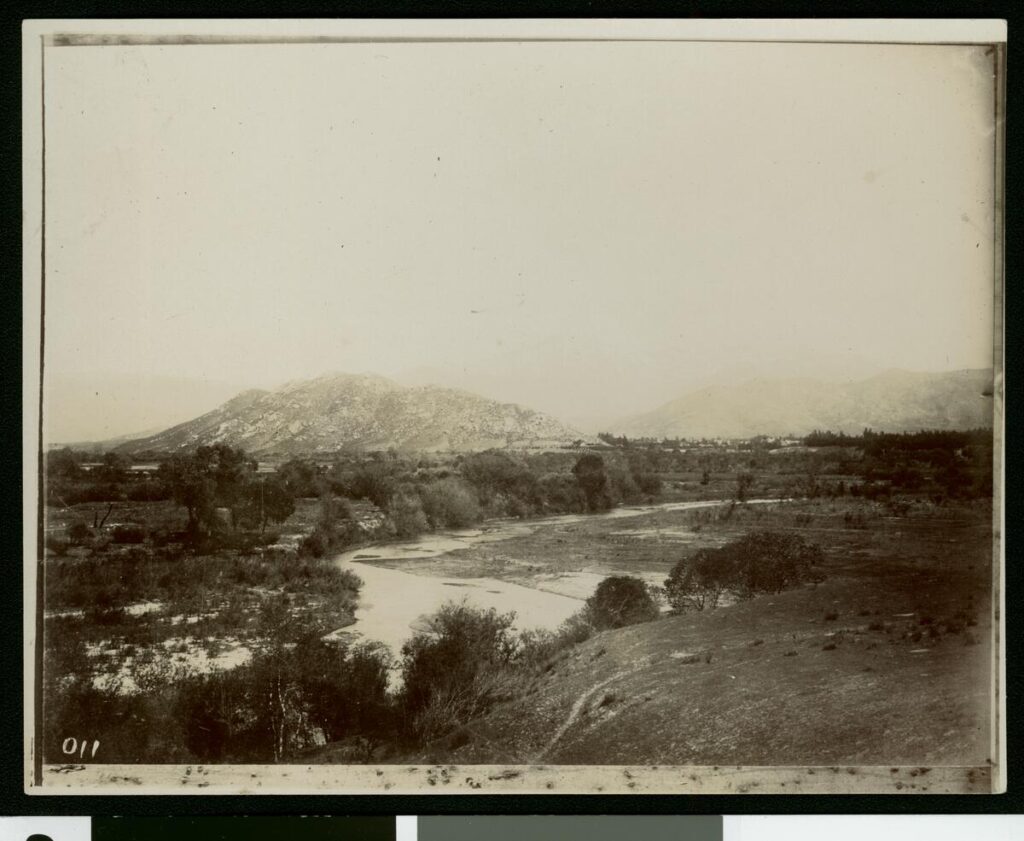
Photo Credit: USC Libraries and California Historical Society
The arrival of the Spanish dramatically altered life in the area. Indigenous communities were stripped of their land and forced into a brutal existence in the Mission system. By 1838, the land became part of Rancho Jurupa through a Mexican land grant awarded to Don Juan Bandini. A few years later, in 1842, Bandini sold part of the property to future Los Angeles mayor Benjamin Davis Wilson, who later transferred a portion of it to Louis Rubidoux in 1847, including the mountain that would eventually bear his name.
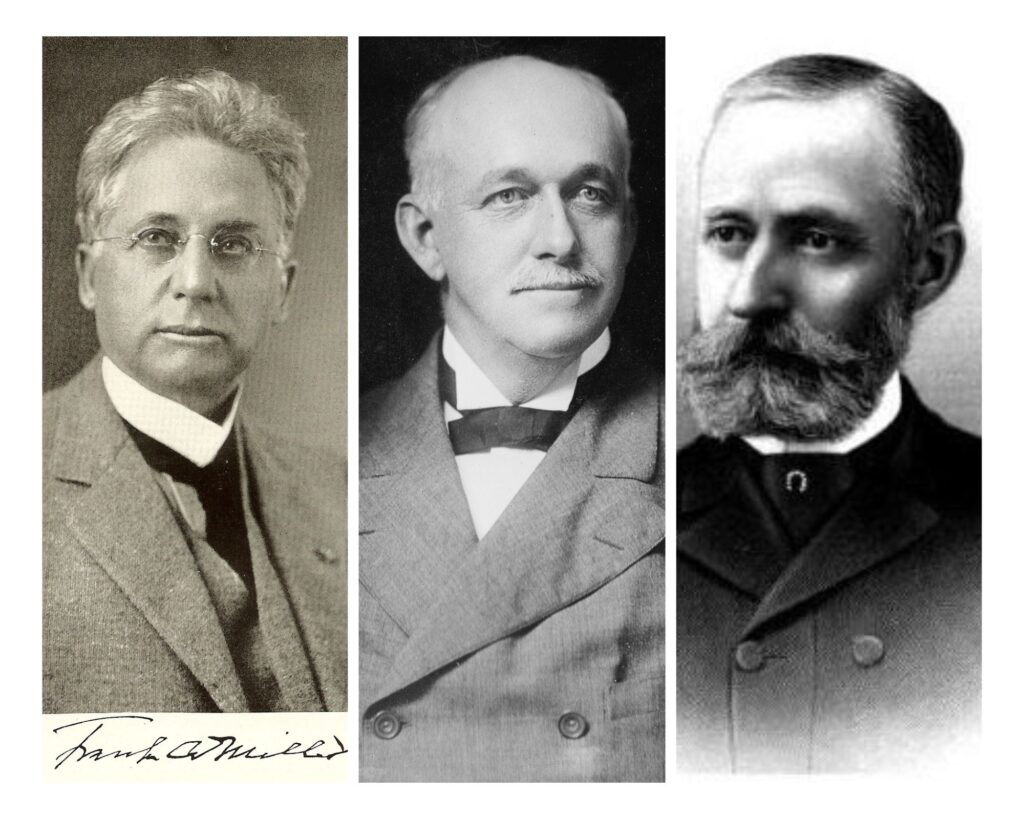
In 1906, Frank Miller, owner of the Mission Inn, partnered with railroad magnate Henry Huntington and businessman Charles Loring to buy the mountain. Their vision was to transform it into a tourist destination and use it to promote residential development in the surrounding area.
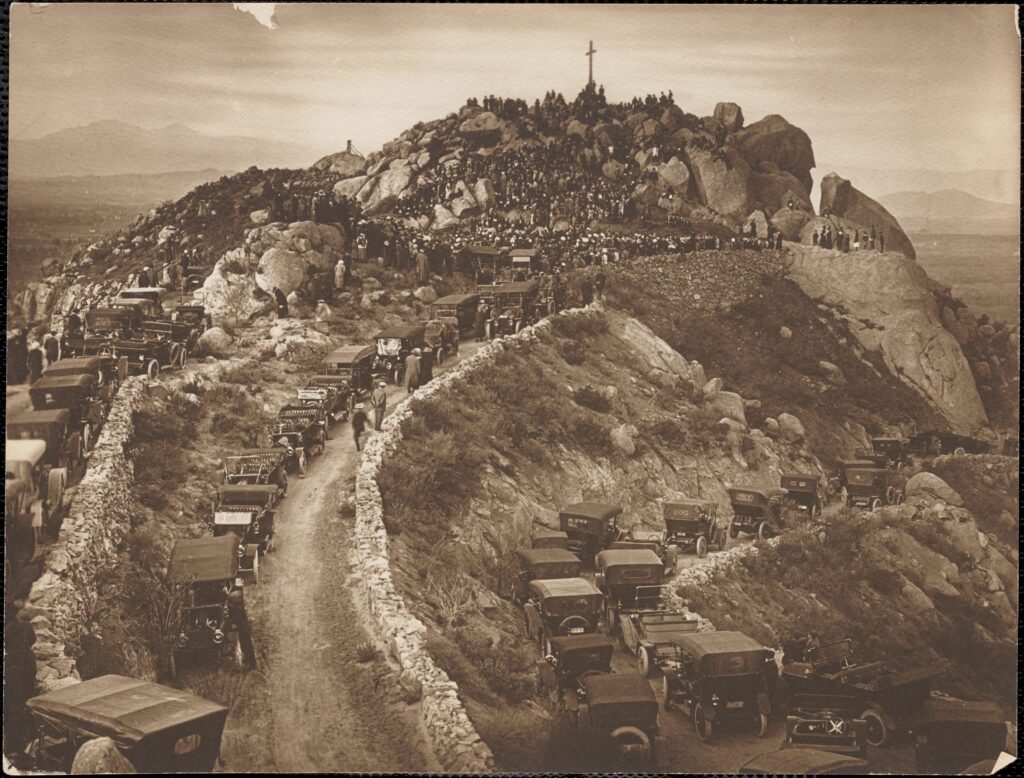
Development moved quickly. U.S. Brigadier General Hiram Chittenden was hired to design a scenic roadway to the summit so visitors could reach the top by automobile. In February 1907, a dedication ceremony was held at the summit, and two months later a large wooden cross honoring Father Junípero Serra was installed. That original cross was replaced in 1963 with the concrete and steel structure that still stands today.
The mountain also became home to one of Riverside’s most enduring traditions. During a 1909 visit, journalist Jacob Riis proposed holding an Easter sunrise service at the summit. The idea took hold immediately and grew into an annual gathering that, during the 1920s, drew crowds of more than 30,000 people. The tradition continues to this day.
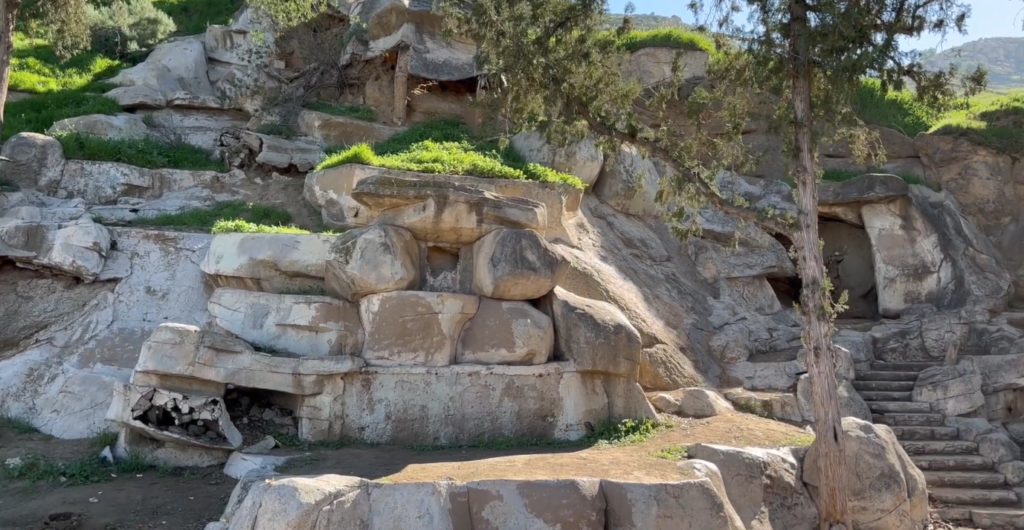
Over time, additional monuments and features were added throughout the mountain. One of the most notable was the St. Francis Fountain, built in 1916 as a tribute to the patron saint of the Mission Inn. It was designed to resemble a natural rock formation and featured a waterfall and a grotto. The fountain eventually fell into disrepair and its unusual appearance inspired local rumors that it was an entrance to the supposed tunnel system that’s said to connect the Mission Inn to other parts of Riverside.
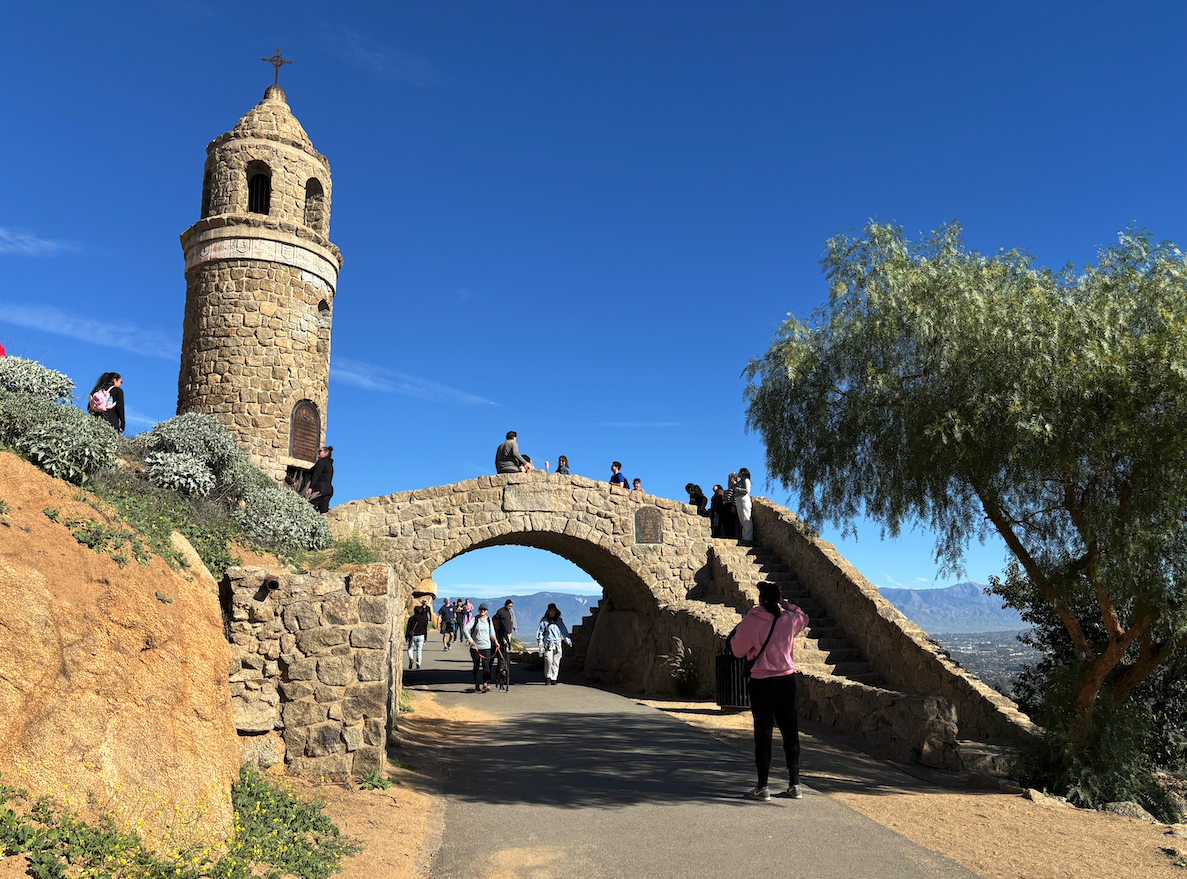
In 1925, while Frank Miller traveled through Europe, Riverside residents honored him by constructing the Peace Tower and Friendship Bridge on the mountain as a public thank-you for his contributions to the growing city.
Miller passed away in 1935 and in the mid-1950s his heirs donated the mountain to the city and it became a public park. Visitors continued driving to the summit for decades until severe storms in 1992 washed out the roadway. The city took this opportunity to restore the trails and permanently close the mountain to cars, creating the pedestrian-friendly experience that draws more than 1,500 visitors each day who hike to the summit for exercise, history, and panoramic views.
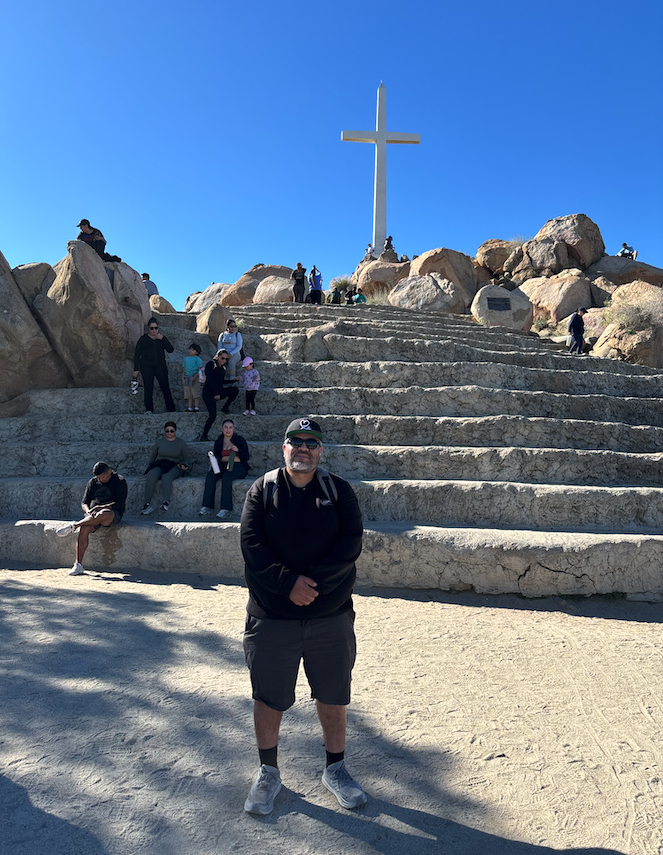
The cross at the summit became the center of controversy in 2012 when legal challenges questioned the presence of a religious monument on public land. The dispute was resolved the following year when the city sold the small parcel beneath the cross to a coalition known as Totally Mount Rubidoux. Today, that section is managed by the Rivers & Lands Conservancy, while the city maintains the surrounding park and the Friends of Mt. Rubidoux continue preserving and sharing its history.
There’s no better place to grab a bite to eat after hiking to the summit of Mt. Rubidoux than Tio’s Tacos, a downtown Riverside staple. Tio’s Tacos is the brainchild of owner Martin Sanchez, whose creativity started long before he ever opened a restaurant. As a child, he loved building toys out of scrap metal, but after losing his father at a young age, he had to set that passion aside and begin working to support his family when he was only five years old. He spent his childhood shining shoes, washing cars, and running errands at a local market. . His friends admired his leadership and began calling him “Tio,” a nickname that stayed with him for life.
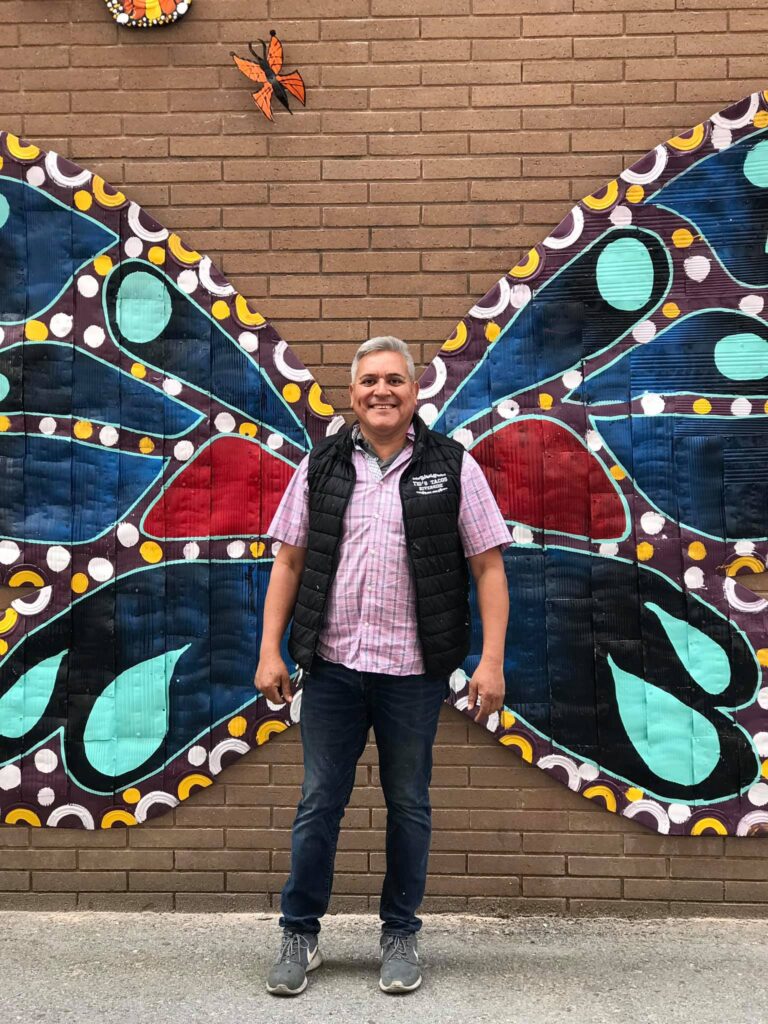
Photo credit; Tio’s Tacos
In 1984, at just 16 years old, Martin immigrated to the United States with his childhood sweetheart, Concepcion. To make ends meet, he started by selling oranges on the streets of East Los Angeles. By 1989, he’d saved enough money to purchase a hot dog cart, which he converted into a taco stand that he set up outside of the location that would eventually become Tio’s Tacos.
The business steadily expanded and by 1990, he rented the restaurant building, five years after that, he had earned enough to buy both the restaurant and the neighboring home. By 2000, he had also acquired the adjacent parking lot and another nearby house. Despite having a successful business, Martin still felt unfulfilled. That’s when he realized that he wanted to reconnect with the creativity he had been forced to abandon as a child.
That inspiration led him to begin creating folk art from discarded materials. He started saving recyclable items from the restaurant: soda cans, beer bottles, oyster shells, old bicycles, toys, shoes, and anything else he thought could be transformed into art. At first, the growing piles of materials drew complaints from the city, but once officials saw the imaginative sculptures and installations taking shape, they seemed to understand his vision.
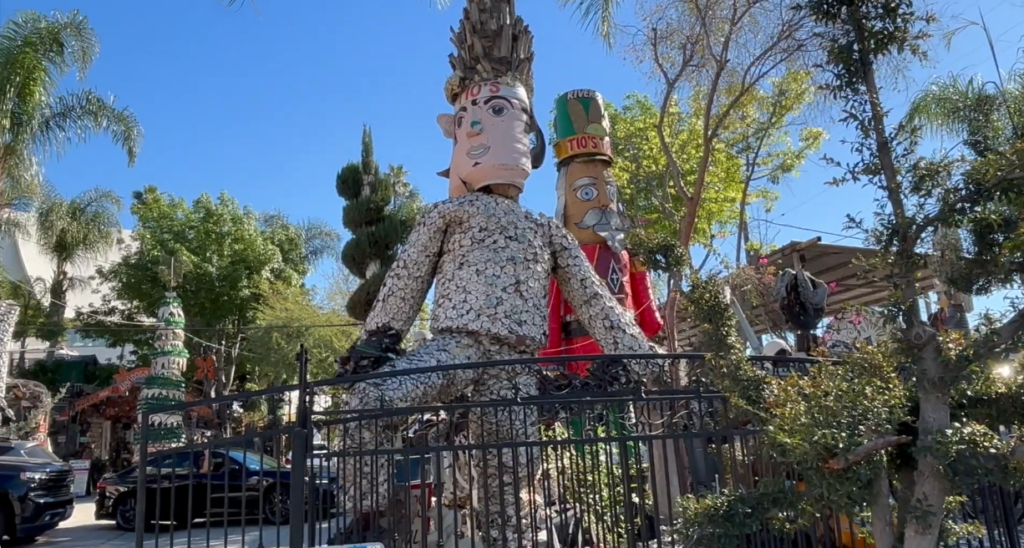
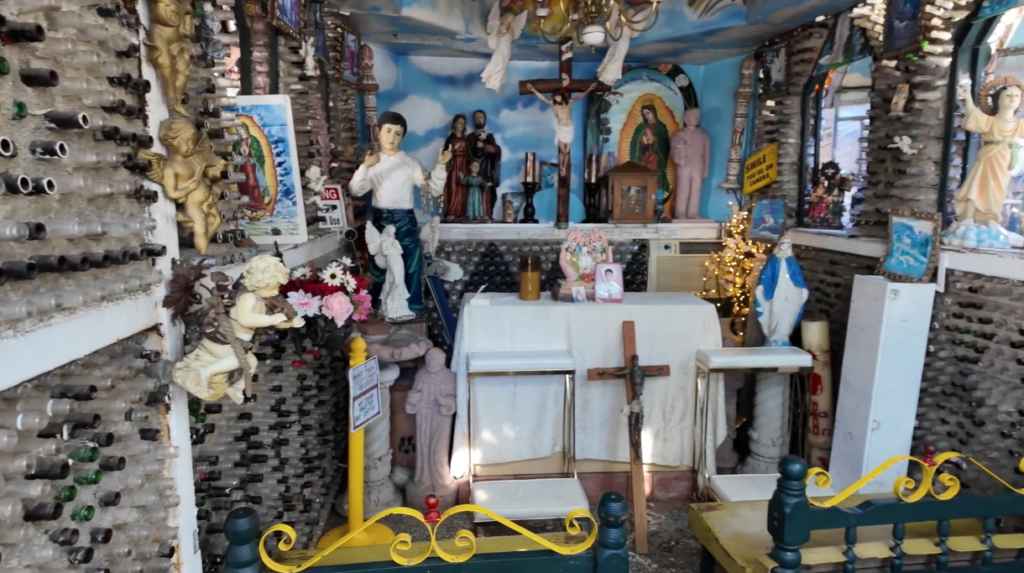
Over time, Martin turned his roughly one-acre property into one of Riverside’s most distinctive artistic landmarks. The space now features massive sculptures and installations crafted almost entirely from recycled materials, including giant figures made from aluminum cans, a rooftop airplane, a pyramid, and even a NASA-inspired space capsule. Many of the pieces reflect both his hometown of Sahuayo, Michoacán, and his life in Riverside. One of the most personal creations is a colorful chapel he built for Concepcion using glass bottles and reclaimed materials. The chapel was even consecrated by the Catholic Church and has become a unique wedding venue.
With all the amazing folk art, it’s easy to forget that Tio’s is a restaurant, but you can’t leave without trying the food that helped finance this folk art destination.
I ended my day in Riverside by paying a visit to The Cheech, the only museum in the United States dedicated entirely to Chicano art. The Cheech is the culmination of a lifetime of collecting by actor and comedian Cheech Marin.
As a child, he gathered baseball cards, marbles, matchbooks, and just about anything that found fascinating. Years later, his legendary career as a comedian and actor gave him the platform and the resources to turn that passion into a mission; collecting and championing Chicano Art.
Over the course of five decades, Cheech assembled a collection of more than 700 works of Chicano art. For Cheech, Chicano art is important because it “reveals the sabor (or flavor) of the community.” It depicts everything from historical events to the most intimate moments of people’s lives, all told from a Chicano perspective.
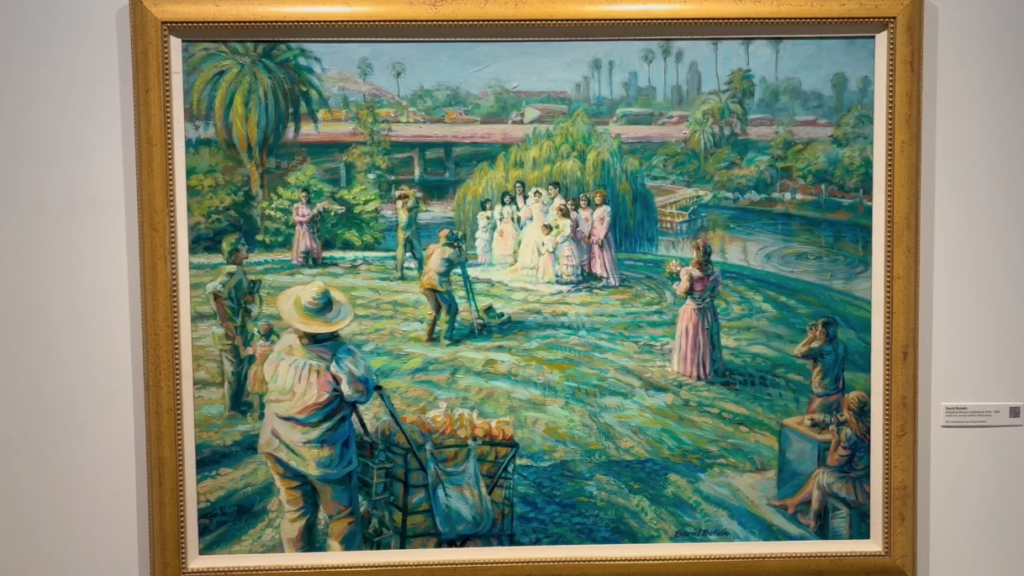
“Wedding Photo–Hollenbeck Park” by David Botello
For years, Cheech shared pieces from his collection through traveling exhibitions at museums around the country. In 2017, he brought part of that collection to Riverside for the exhibition “Papel Chicano Dos: Works on Paper from the Collection of Cheech Marin” at the Riverside Art Museum. The exhibit became one of the museum’s most successful shows ever, setting new attendance records.
The overwhelming response inspired a partnership between the City of Riverside, the Riverside Art Museum, and Cheech himself to create a permanent home for the collection: The Cheech Marin Center for Chicano Art & Culture, better known simply as “The Cheech.” Under the agreement, Cheech donated his artwork while the Riverside Art Museum took responsibility for operating the institution.
When the museum officially opened in 2022, it was met with widespread excitement and national attention. In its first two years alone, The Cheech welcomed more than 200,000 visitors and generated an estimated $29 million for the local economy.
During my visit, two exhibitions were on display. The first, “Cheech Collects IV,” featured a rotating selection of works from Cheech’s personal collection. This one focused on highlighting pastels alongside newer acquisitions that were added to the museum’s holdings.
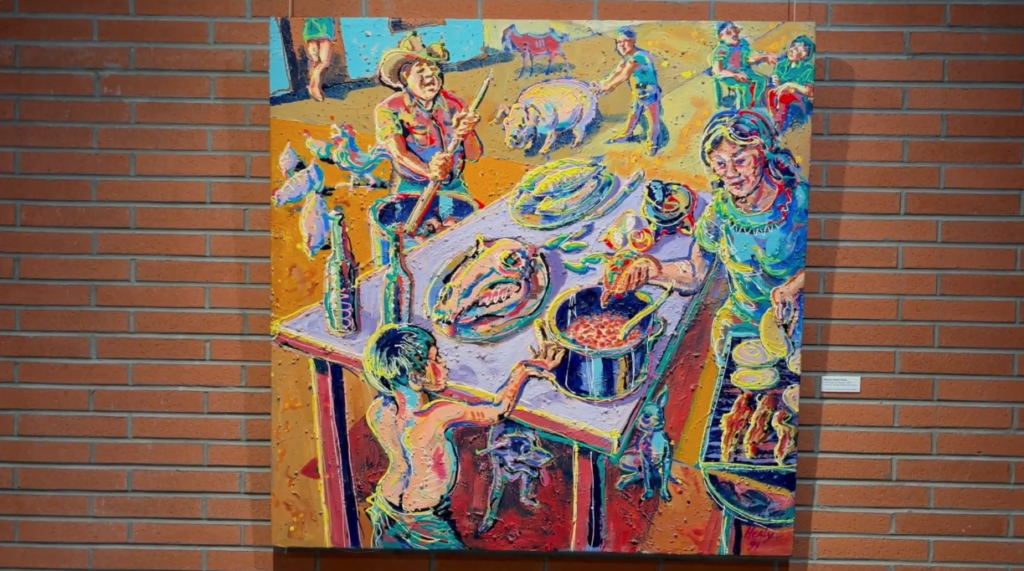
The second was “Black & Brown in the Inland Empire ad Beyond” an exhibition that showcased artwork that grew out of workshops where artists explored the Inland Empire’s layered and complicated histories and turned those stories into artwork that speaks to resilience, identity, and the power of telling your own story.
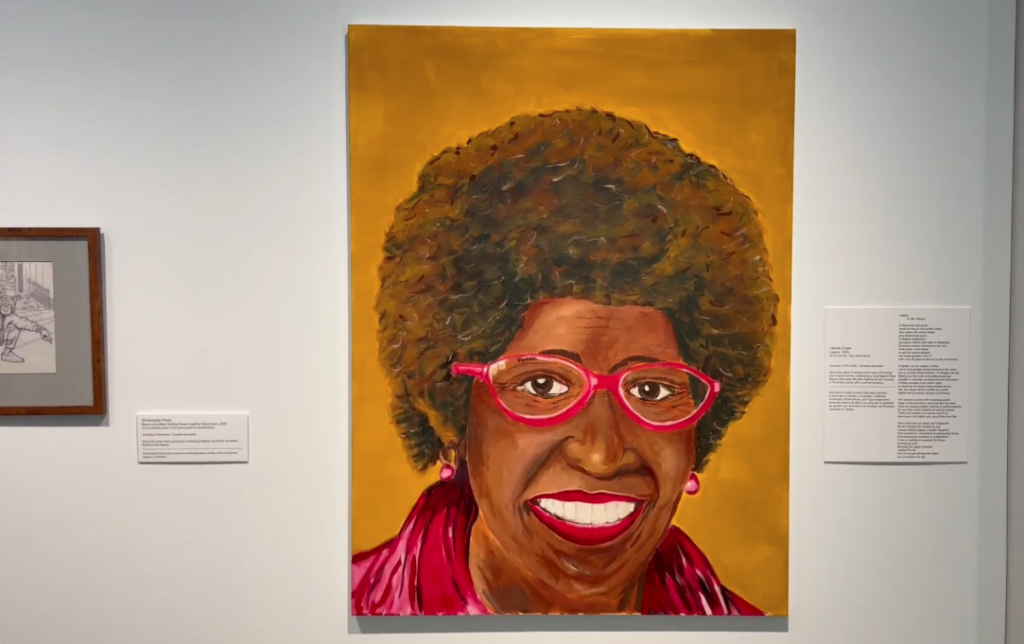
Today, The Cheech stands a cultural anchor for the Inland Empire and a world-class home for Chicano art—elevating artists, preserving stories, and putting Chicano culture exactly where it belongs: front and center.